
Dental Implants vs Dentures: Which Is Better for You?
Dental Implants vs Dentures: Which Is Better for You?
Introduction
Tooth loss can significantly impact your daily life, affecting everything from chewing and speaking to overall confidence. Fortunately, modern dentistry offers effective solutions to restore both function and aesthetics. Among the most common options are dental implants and dentures, each with its own benefits, limitations, and suitability depending on individual needs.
Patients often ask: Which option is better—dental implants or dentures? The answer isn’t always straightforward, as it depends on factors such as oral health, budget, lifestyle, and long-term goals.
In this comprehensive guide, we’ll break down the differences between dental implants and dentures, explain how each option works, highlight their pros and cons, and help you determine which solution may be best suited for your situation. By understanding both treatments in detail, you can make a confident and informed decision about restoring your smile and oral health.
What Are Dental Implants?
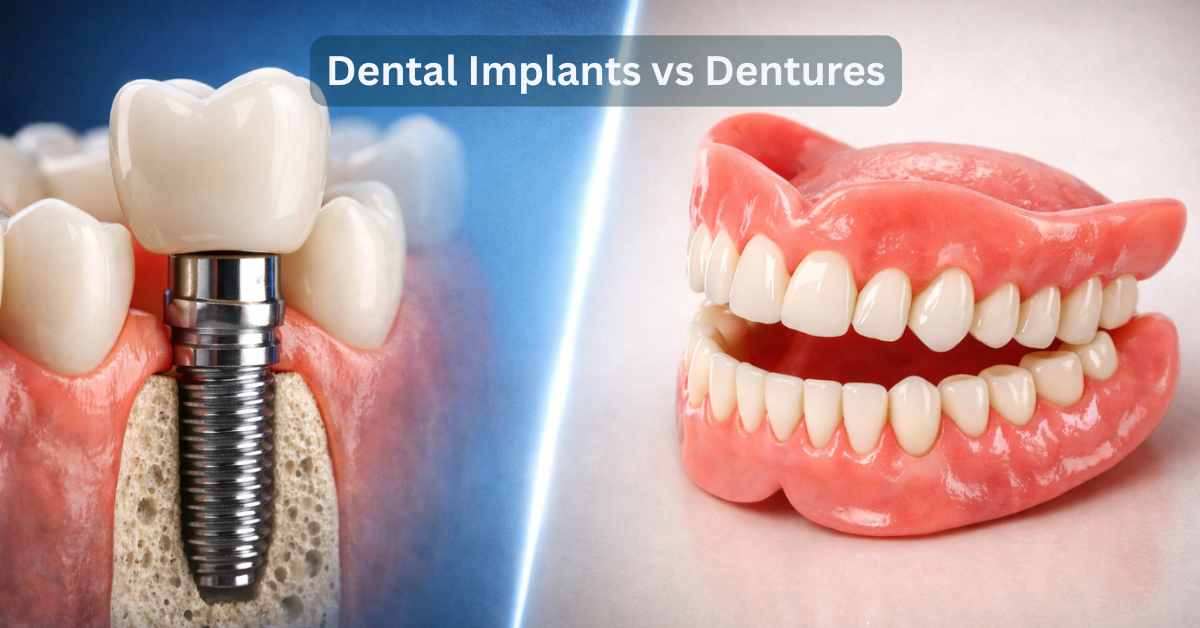
Dental implants are a permanent tooth replacement solution that involves placing a titanium post into the jawbone to act as an artificial tooth root. This post integrates with the bone through a process called osseointegration, creating a strong and stable foundation for crowns, bridges, or implant-supported dentures.
Key Features of Dental Implants
- Surgically placed into the jawbone
- Mimic natural tooth structure
- Provide long-term stability
- Help preserve jawbone density
- Support single or multiple tooth replacements
Unlike removable solutions, dental implants function similarly to natural teeth and are designed for durability and comfort.
What Are Dentures?
Dentures are removable prosthetic devices designed to replace missing teeth and surrounding tissues. They can be full (replacing all teeth) or partial (replacing several missing teeth while preserving remaining natural teeth).
Types of Dentures
- Full Dentures: Replace an entire arch of teeth
- Partial Dentures: Replace a few missing teeth
- Implant-Supported Dentures: A hybrid solution combining implants and dentures
Dentures rest on the gums and are typically made from acrylic, metal frameworks, or flexible materials.
How Do Dental Implants and Dentures Work?
Dental Implants Process
- Initial consultation and imaging
- Implant placement surgery
- Healing and osseointegration (3–6 months)
- Abutment placement
- Crown or prosthetic attachment
Dentures Process
- Oral examination and impressions
- Fabrication of custom dentures
- Fitting and adjustments
- Ongoing maintenance and relining (if needed)
The key difference lies in permanence vs removability and bone integration vs surface support.
Advantages of Dental Implants
1. Long-Term Durability
Dental implants can last 20+ years or even a lifetime with proper care.
2. Natural Look and Feel
They closely resemble natural teeth in both appearance and function.
3. Bone Preservation
Implants stimulate the jawbone, preventing bone loss after tooth extraction.
4. Improved Chewing Ability
Patients can eat a wide variety of foods without restrictions.
5. No Slippage or Movement
Unlike dentures, implants remain securely fixed in place.
Advantages of Dentures
1. Cost-Effective Solution
Dentures are generally more affordable upfront than implants.
2. Non-Surgical Option
Ideal for patients who prefer to avoid surgery or are not candidates for implants.
3. Faster Treatment Timeline
Dentures can often be fabricated and fitted within weeks.
4. Suitable for Extensive Tooth Loss
Full dentures can replace an entire set of teeth efficiently.
Disadvantages of Dental Implants
- Higher initial cost
- Requires surgical procedure
- Longer treatment time
- Not suitable for patients with insufficient bone without grafting
Disadvantages of Dentures
- May feel loose or uncomfortable
- Require regular adjustments
- Can affect speech initially
- Do not prevent bone loss
- Need to be removed for cleaning
Which Option Is Better for You?
Choosing between dental implants and dentures depends on several factors:
1. Oral Health Condition
Patients with healthy gums and adequate bone density are better candidates for implants.
2. Budget Considerations
Dentures are more affordable initially, while implants are a long-term investment.
3. Lifestyle and Preferences
Active individuals often prefer implants for their stability and convenience.
4. Long-Term Goals
If you’re looking for a permanent solution, implants are typically the better choice.
5. Medical History
Certain medical conditions may affect eligibility for implant surgery.
When Should You Choose Dental Implants?
You may consider dental implants if you:
- Want a permanent, long-lasting solution
- Have sufficient jawbone density
- Prefer a natural look and feel
- Want to avoid removable appliances
- Are willing to invest in long-term oral health
When Should You Choose Dentures?
Dentures may be suitable if you:
- Are looking for a cost-effective solution
- Prefer a non-surgical treatment
- Need a quick restoration
- Have significant bone loss
- Are not a candidate for implants
Can You Combine Both Options?
Yes, many patients opt for implant-supported dentures, which offer the stability of implants combined with the coverage of dentures. This hybrid solution provides improved comfort, better chewing ability, and reduced movement compared to traditional dentures.
Related Dental Treatments
Both dental implants and dentures are often part of a broader treatment plan that may include:
- Tooth extractions
- Bone grafting procedures
- Cosmetic dentistry enhancements
- General dental care for maintenance
Frequently Asked Questions
Q1: Are dental implants better than dentures?
Dental implants are generally considered superior in terms of stability, longevity, and bone preservation. However, dentures remain a practical option for patients with budget or medical limitations.
Q2: How long do dentures last compared to implants?
Dentures typically last 5–10 years, while dental implants can last decades with proper care.
Q3: Are dental implants painful?
The procedure is performed under anesthesia, and most patients experience only mild discomfort during recovery.
Q4: Can dentures look natural?
Yes, modern dentures are designed to look natural, though they may not match the realism of implants.
Q5: Can I switch from dentures to implants later?
Yes, many patients transition from dentures to implants once they become suitable candidates.
Conclusion
Both dental implants and dentures are effective solutions for replacing missing teeth, each offering unique advantages depending on your needs and circumstances. Dental implants provide a long-lasting, stable, and natural-feeling solution, making them ideal for patients seeking a permanent option. Dentures, on the other hand, offer a more accessible and non-invasive approach, especially for those with budget or medical limitations.
Ultimately, the best choice depends on your oral health, lifestyle, and long-term goals. Consulting with a qualified dental professional can help you evaluate your options and determine the most suitable treatment plan for restoring your smile, function, and confidence.