
Cosmetic Dentistry Before & After: What Results Are Realistic?
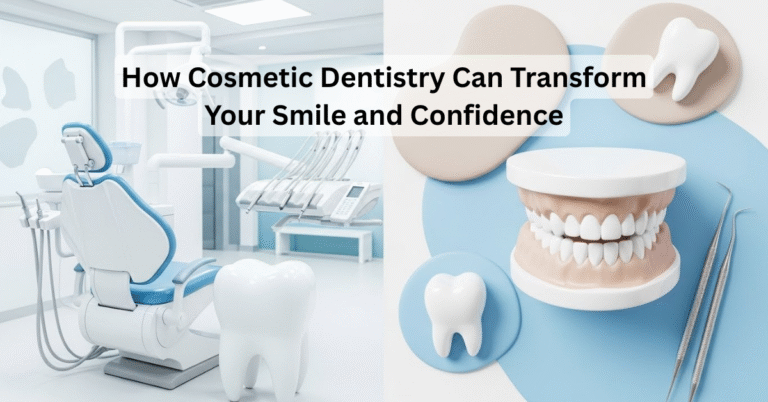
Cosmetic dentistry has transformed the way patients in Texas approach oral health and aesthetics. From teeth whitening and veneers to bonding and complete smile makeovers, these procedures promise to enhance appearance and boost confidence. However, many patients wonder what results are realistic and whether “before and after” photos reflect typical outcomes. Understanding the possibilities, limitations, and factors that influence results helps patients make informed decisions and set achievable expectations. In this comprehensive guide, we’ll explore the most popular cosmetic dental treatments, their typical outcomes, how results vary among patients, and tips for maintaining a lasting, healthy smile. By combining professional expertise with patient-specific factors, cosmetic dentistry can deliver impressive yet realistic transformations that improve both function and aesthetics.
What Is Cosmetic Dentistry?
Cosmetic dentistry encompasses a variety of procedures aimed at improving the appearance of teeth, gums, and overall smile. Unlike general dentistry, which focuses on oral health and function, cosmetic dentistry prioritizes aesthetics while often supporting oral health. Common treatments include veneers, teeth whitening, bonding, crowns, and orthodontic interventions like Invisalign. Each procedure addresses specific concerns, such as discoloration, misalignment, chips, gaps, or uneven tooth size. While cosmetic dentistry can produce dramatic results, realistic expectations are important because outcomes depend on oral health, age, lifestyle habits, and individual anatomy. Dentists in Texas use a combination of digital imaging, mock-ups, and consultations to guide patients through achievable results.
Popular Cosmetic Dentistry Treatments and Realistic Results
Teeth Whitening
Teeth whitening is one of the most requested cosmetic treatments. It effectively lightens teeth several shades, removing stains caused by coffee, tea, tobacco, or aging. Professional in-office whitening typically delivers noticeable results in one session, whereas take-home trays require multiple applications. Patients should understand that whitening results vary based on enamel thickness, degree of staining, and oral habits. While whitening can produce a brighter, cleaner smile, it may not completely eliminate deep intrinsic discoloration or restore heavily damaged enamel.
Veneers
Porcelain veneers are thin shells bonded to the front of teeth to correct shape, size, or color. They provide a uniform and natural-looking smile. Realistic results depend on proper planning, tooth preparation, and dental artistry. Veneers can hide minor misalignment, gaps, or chipped teeth, but they cannot replace the function of orthodontics for severe crowding or bite issues. Patients should also maintain excellent oral hygiene to ensure veneers last many years.
Dental Bonding
Bonding uses tooth-colored composite resin to repair chips, close gaps, or improve appearance. It is less invasive and more affordable than veneers, but results are generally less durable and may stain over time. Bonding is ideal for minor cosmetic corrections, offering a quick improvement in aesthetics while preserving natural tooth structure.
Crowns and Bridges
While primarily restorative, crowns and bridges can also improve appearance, especially when replacing worn, discolored, or damaged teeth. Modern materials mimic natural enamel in color and translucency, producing results that are both functional and aesthetic. Realistic expectations include a slight difference in feel compared to natural teeth and periodic maintenance to ensure longevity.
Invisalign and Orthodontic Cosmetic Corrections
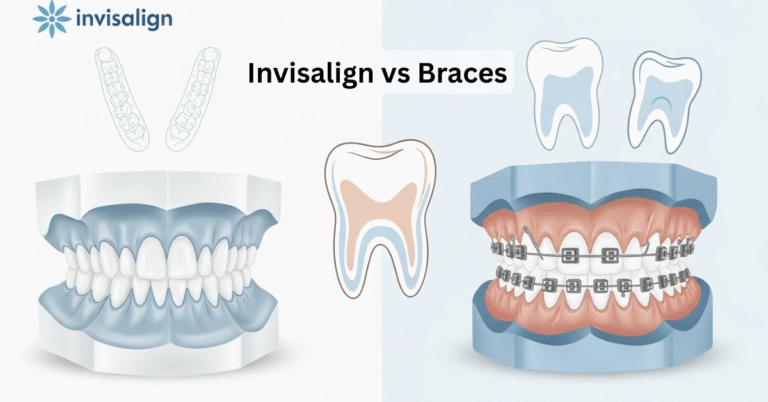
For patients with misaligned teeth, Invisalign and other clear aligner systems gradually reposition teeth to improve alignment. Realistic outcomes depend on treatment compliance, complexity of misalignment, and patient age. While Invisalign can dramatically improve appearance over time, achieving perfectly straight teeth may require adjunctive treatments or refinements.
Factors That Influence Cosmetic Dentistry Results
Several factors affect the final outcomes of cosmetic dental treatments:
- Oral Health: Patients must have healthy teeth and gums before undergoing cosmetic procedures to ensure long-lasting results.
- Age: Aging affects enamel thickness, gum recession, and oral tissue elasticity, which can impact aesthetics.
- Lifestyle Habits: Smoking, dietary choices, and oral hygiene habits influence how long results last.
- Material Choice: The type of veneer, crown, or whitening system can affect durability and visual appearance.
- Professional Expertise: Skilled dental professionals in Texas use advanced imaging, mock-ups, and precise techniques to maximize realistic results.
By considering these factors, patients can set expectations and work with their dentist to achieve results that are both visually satisfying and maintainable.
What to Expect from Before & After Photos
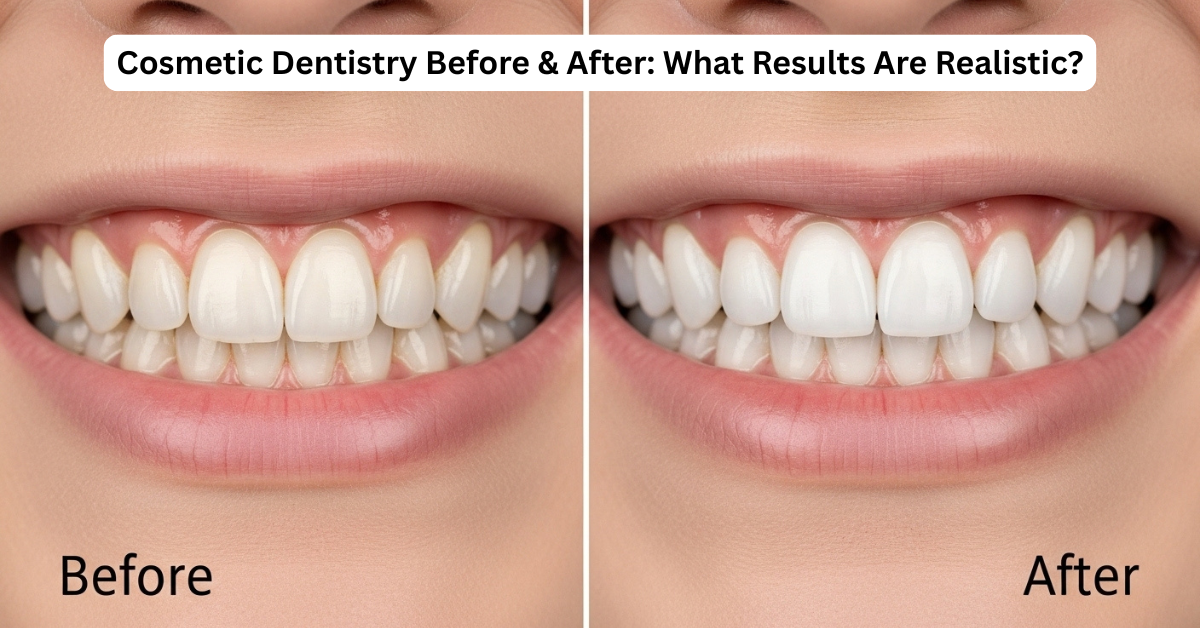
Before and after photos are powerful tools for patient education, but they should be interpreted cautiously. Photos often highlight best-case results and may not represent every patient’s experience. Lighting, angles, and editing can exaggerate improvements. It is important for patients to view a wide range of cases, discuss potential outcomes with their dentist, and understand that minor variations in tooth color, shape, and alignment are normal. Texas dentists typically provide consultations with digital simulations to help patients visualize realistic results tailored to their own oral anatomy.
Maintaining Cosmetic Dentistry Results
Achieving a beautiful smile is only part of the process; maintenance is key to preserving results. Regular dental check-ups, professional cleanings, and diligent oral hygiene routines protect teeth, gums, and restorations. Patients should avoid habits that damage enamel or restorations, such as chewing hard objects, grinding teeth, or consuming excessive acidic or staining foods. Additionally, touch-up treatments like periodic whitening or minor bonding repairs help sustain the aesthetic improvements over time.
When Cosmetic Dentistry Is Recommended
Cosmetic dentistry may be recommended for patients seeking to:
- Improve the color, shape, or alignment of teeth.
- Repair chips, cracks, or worn-down teeth.
- Replace missing teeth for both function and aesthetics.
- Enhance overall confidence and professional appearance.
- Address early signs of enamel erosion or discoloration preventively.
A thorough consultation with a licensed dentist in Texas ensures that cosmetic dentistry is appropriate for the individual’s oral health status and aesthetic goals.
Related Dental Treatments
Cosmetic dentistry often intersects with other dental services to maximize results. Treatments such as dental implants, crowns, general dentistry check-ups, and Invisalign aligners may complement cosmetic procedures. Linking cosmetic interventions with broader dental care ensures oral health and longevity of results. Patients benefit from integrated care, where cosmetic enhancements also support functional dental health.
Frequently Asked Questions About Cosmetic Dentistry Before & After
Q1: Are before and after results guaranteed?
A: Results vary based on oral health, procedure type, and patient compliance. Dentists provide realistic expectations rather than absolute guarantees.
Q2: How long do cosmetic dentistry results last?
A: Depending on the procedure, results can last from several years (bonding, whitening) to decades (veneers, crowns). Proper maintenance is essential.
Q3: Can cosmetic dentistry fix all dental imperfections?
A: While it addresses most aesthetic concerns, severe misalignment, advanced decay, or bite issues may require additional treatments like orthodontics or restorative care.
Q4: Is cosmetic dentistry painful?
A: Most procedures are minimally invasive and performed under local anesthesia or sedation if needed, ensuring patient comfort.
Q5: How should I choose a dentist for cosmetic dentistry?
A: Look for licensed professionals with experience in aesthetic procedures, a portfolio of before and after cases, and patient reviews for quality assurance.
Conclusion
Cosmetic dentistry provides transformative options for patients seeking to improve their smiles in Texas, but realistic expectations are essential. Understanding the limitations, maintenance requirements, and individual factors ensures that results are satisfying and sustainable. By combining professional expertise, proper oral care, and patient awareness, cosmetic dental procedures like veneers, bonding, teeth whitening, and aligners can deliver natural, long-lasting results. If you’re considering cosmetic enhancements, schedule a consultation with a trusted dentist to discuss your goals, review before and after possibilities, and create a personalized treatment plan for a confident, radiant smile.