
Emergency Dentist vs Urgent Care: Where Should You Go?
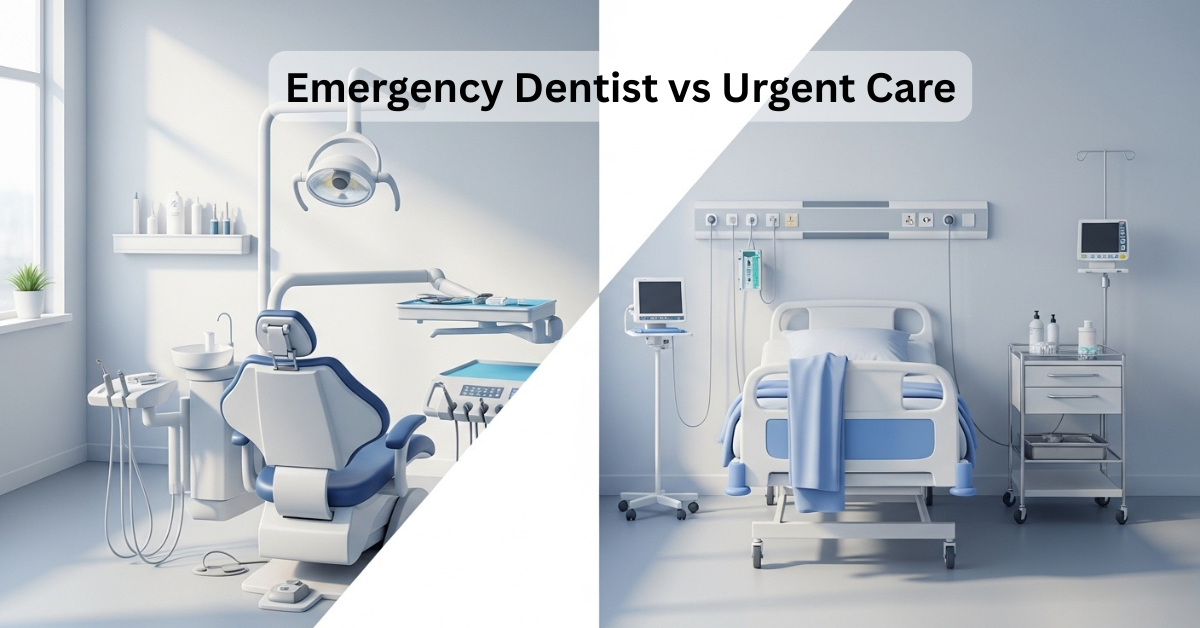
Emergency Dentist vs Urgent Care: Where Should You Go?
Introduction
Dental emergencies can happen without warning—whether it’s sudden tooth pain, a broken tooth, or an injury affecting your mouth. In these stressful situations, many patients in Texas find themselves asking an important question: Should I go to an emergency dentist or urgent care?
Understanding the difference between these two options can help you make the right decision quickly, potentially saving your tooth and preventing further complications. While both emergency dentists and urgent care centers provide immediate care, they serve very different purposes when it comes to oral health.
In this guide, we’ll explain the key differences between emergency dental care and urgent care services, when to choose each option, and how to handle common dental emergencies effectively.
What Is an Emergency Dentist?
An emergency dentist is a dental professional who specializes in treating urgent oral health issues that require immediate attention.
What Emergency Dentists Handle
- Severe tooth pain or toothache
- Broken, chipped, or cracked teeth
- Knocked-out (avulsed) teeth
- Dental abscess or infection
- Lost fillings or crowns
- Bleeding or swelling in the mouth
Emergency dentists are equipped with specialized tools and training to diagnose and treat dental problems directly.
What Is Urgent Care?
Urgent care centers provide medical treatment for non-life-threatening conditions that require prompt attention.
What Urgent Care Handles
- Minor injuries and infections
- Fever or flu symptoms
- Cuts and wounds
- General pain management
While urgent care providers can help manage symptoms, they typically do not offer specialized dental treatments.
When Should You Go to an Emergency Dentist?
You should visit an emergency dentist if you experience:
Severe Tooth Pain
Persistent or intense pain may indicate infection or nerve damage.
Broken or Cracked Tooth
Immediate care can prevent further damage and restore the tooth.
Knocked-Out Tooth
Quick action increases the chances of saving the tooth.
Dental Abscess
A serious infection that requires urgent treatment to prevent complications.
Lost Crown or Filling
Exposed teeth can become sensitive or infected if not treated quickly.
When Should You Go to Urgent Care Instead?
Urgent care may be appropriate if:
You Have Severe Swelling
Swelling that affects breathing or extends beyond the mouth may require medical attention.
You Have a Fever with Dental Pain
This may indicate a spreading infection that needs immediate medical evaluation.
You Need Pain Relief After Hours
Urgent care can provide temporary medication until you see a dentist.
You Have Facial Trauma
Injuries involving the jaw, face, or head may require medical imaging and evaluation.
Common Dental Emergencies and Where to Go
Toothache
- Best option: Emergency dentist
- Reason: Identifies and treats underlying cause
Knocked-Out Tooth
- Best option: Emergency dentist
- Reason: Time-sensitive tooth-saving treatment
Dental Abscess
- Best option: Emergency dentist (urgent care if severe swelling or fever)
Broken Tooth
- Best option: Emergency dentist
Jaw Injury
- Best option: Urgent care or hospital
Why Choosing the Right Option Matters
Choosing the correct type of care can make a significant difference in your outcome.
Faster Treatment
Emergency dentists can treat the issue immediately without referral.
Better Outcomes
Prompt dental care increases the chances of saving teeth.
Reduced Complications
Proper treatment prevents infections from spreading.
Cost Efficiency
Treating the problem early may reduce the need for more complex procedures later.
What Happens If You Go to Urgent Care for a Dental Problem?
If you visit urgent care for a dental issue, you can expect:
- Basic examination
- Pain relief medication
- Antibiotics (if infection is suspected)
- Referral to a dentist
While this can help temporarily, it does not solve the underlying dental issue.
What to Do in a Dental Emergency Before Treatment
For a Knocked-Out Tooth
- Keep the tooth moist (milk or saliva)
- Avoid touching the root
- Seek immediate dental care
For Tooth Pain
- Rinse with warm salt water
- Avoid very hot or cold foods
For a Broken Tooth
- Save any fragments
- Rinse your mouth
- Avoid chewing on the affected side
For Swelling
- Apply a cold compress
- Seek immediate care if swelling worsens
Preventing Dental Emergencies
While not all emergencies can be avoided, you can reduce risk by:
- Maintaining good oral hygiene
- Attending regular dental check-ups
- Avoiding hard foods that can crack teeth
- Wearing a mouthguard during sports
- Addressing dental issues early
When Should You Act Immediately?
Seek immediate care if you experience:
- Severe pain that doesn’t go away
- Uncontrolled bleeding
- Swelling affecting breathing
- Signs of infection (fever, pus, swelling)
Delaying treatment can lead to serious complications.
Related Dental Treatments
Emergency dental care often leads to follow-up treatments such as:
- Root canal treatment
- Dental crowns
- Tooth extraction
- Dental implants
- General dentistry for ongoing care
Frequently Asked Questions
Q1: Can urgent care treat a tooth infection?
Urgent care can provide antibiotics and pain relief, but you will still need a dentist to treat the underlying issue.
Q2: Should I go to the ER for a toothache?
The ER is usually not necessary unless the condition involves severe swelling, trauma, or difficulty breathing.
Q3: How quickly should I see a dentist for a dental emergency?
You should seek dental care as soon as possible, especially for pain, infection, or injury.
Q4: What happens if I delay dental emergency treatment?
Delaying treatment can lead to worsening pain, infection, and possible tooth loss.
Q5: Are emergency dentists available after hours?
Many dental clinics offer emergency services or on-call support for urgent situations.
Conclusion
When facing a dental emergency, knowing whether to visit an emergency dentist or urgent care can make a critical difference in your outcome. Emergency dentists are best equipped to diagnose and treat dental issues directly, while urgent care centers provide temporary relief for symptoms and handle broader medical concerns.
For most dental problems—such as tooth pain, broken teeth, or infections—an emergency dentist is the right choice. However, in cases involving severe swelling, trauma, or systemic symptoms, urgent care or medical attention may be necessary. Acting quickly and choosing the appropriate care ensures better results, reduced complications, and improved long-term oral health.