
Invisalign vs Braces: Pros, Cons & Cost Comparison
Invisalign vs Braces: Pros, Cons & Cost Comparison
Introduction
When it comes to straightening teeth and improving your smile, two of the most popular orthodontic options are Invisalign and traditional braces. Both treatments are highly effective, but they differ significantly in terms of appearance, comfort, cost, and treatment experience.
Patients often find themselves asking: Should I choose Invisalign or braces? The answer depends on multiple factors, including the complexity of your dental issue, your lifestyle, and your personal preferences. While Invisalign offers a nearly invisible solution, braces provide unmatched precision for more complex cases.
In this comprehensive guide, we’ll compare Invisalign and braces in detail—covering how they work, their advantages and disadvantages, cost differences, and which option may be better suited for your needs. By the end, you’ll have a clear understanding of both treatments and be able to make a confident, informed decision about your orthodontic care.
What Is Invisalign?
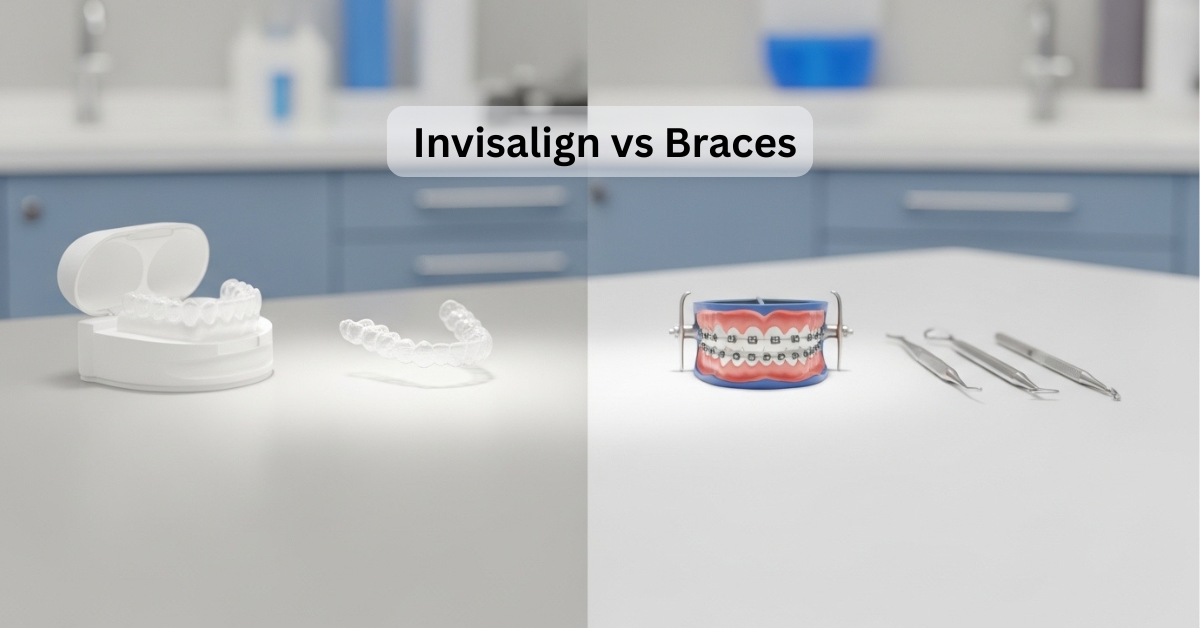
Invisalign is a modern orthodontic treatment that uses clear, removable aligners to gradually shift teeth into proper alignment. These aligners are custom-made using advanced 3D imaging technology and are replaced every one to two weeks as your teeth move.
Key Features of Invisalign
- Transparent and nearly invisible
- Removable for eating and cleaning
- Custom-designed for each patient
- Smooth plastic material for comfort
- Gradual, controlled tooth movement
Invisalign is especially popular among adults and teens who want a discreet way to improve their smile.
What Are Traditional Braces?
Traditional braces use a system of metal brackets and wires attached to the teeth to apply continuous pressure and move them into alignment over time. Modern braces can also include ceramic (tooth-colored) options for a less noticeable appearance.
Key Features of Braces
- Fixed to teeth (non-removable)
- Effective for complex orthodontic cases
- Precise control of tooth movement
- Suitable for all age groups
- Available in metal or ceramic options
Braces have been used for decades and remain one of the most reliable orthodontic treatments.
How Do Invisalign and Braces Work?
Invisalign Process
- Initial consultation and digital scanning
- Custom treatment plan creation
- Series of aligners provided
- Aligners worn 20–22 hours daily
- Progress monitored with periodic check-ups
Braces Process
- Consultation and treatment planning
- Brackets bonded to teeth
- Archwires attached and adjusted periodically
- Regular tightening appointments
- Removal after treatment completion
The primary difference lies in removability and visibility, with Invisalign offering flexibility and braces providing continuous pressure.
Pros of Invisalign
1. Nearly Invisible Appearance
Invisalign aligners are clear, making them difficult to notice during daily interactions.
2. Removable Convenience
Patients can remove aligners while eating, brushing, or flossing, making oral hygiene easier.
3. Comfortable Design
Smooth plastic aligners reduce irritation compared to metal brackets and wires.
4. Fewer Dietary Restrictions
You can eat your favorite foods without worrying about damaging brackets.
5. Fewer Office Visits
Invisalign typically requires fewer adjustments than braces.
Cons of Invisalign
- Requires strict discipline (20–22 hours wear)
- Not ideal for severe or complex cases
- Aligners can be lost or misplaced
- May cause slight speech changes initially
- Can be more expensive in some cases
Pros of Braces
1. Effective for Complex Cases
Braces can correct severe misalignment, bite issues, and overcrowding.
2. Continuous Treatment
Since braces are fixed, they work 24/7 without relying on patient compliance.
3. More Predictable Results
Orthodontists have precise control over tooth movement.
4. Suitable for All Ages
Braces are effective for children, teens, and adults.
Cons of Braces
- Visible and noticeable
- Can cause discomfort and irritation
- Food restrictions (avoid sticky or hard foods)
- More difficult oral hygiene routine
- Requires frequent dental visits
Cost Comparison: Invisalign vs Braces
Invisalign Cost
- Typically ranges from moderate to high depending on case complexity
- May cost more due to advanced technology and customization
Braces Cost
- Generally more affordable, especially traditional metal braces
- Ceramic braces may cost slightly more
Factors That Affect Cost
- Severity of dental issues
- Treatment duration
- Geographic location
- Dentist or orthodontist expertise
- Insurance coverage
While Invisalign may have a higher upfront cost, many patients find the convenience and aesthetics worth the investment.
Treatment Time Comparison
- Invisalign: 6–18 months (for mild to moderate cases)
- Braces: 12–24 months (depending on complexity)
Braces may take longer but are often more effective for complex corrections.
Which Option Is Better for You?
Choosing between Invisalign and braces depends on:
1. Complexity of Dental Issues
Severe misalignment or bite problems are better treated with braces.
2. Lifestyle Preferences
Busy professionals often prefer Invisalign for its flexibility and discreet look.
3. Age and Responsibility
Younger patients may benefit more from braces due to compliance challenges.
4. Budget
Braces are often more affordable, while Invisalign offers premium convenience.
5. Aesthetic Concerns
If appearance matters, Invisalign is the preferred choice.
When Should You Choose Invisalign?
You may choose Invisalign if you:
- Want a discreet orthodontic solution
- Have mild to moderate alignment issues
- Can commit to wearing aligners consistently
- Prefer removable treatment options
- Value comfort and convenience
When Should You Choose Braces?
Braces may be the better option if you:
- Have complex orthodontic issues
- Need precise tooth movement
- Prefer a fixed solution
- Are concerned about compliance
- Want a more cost-effective treatment
Can You Combine Both Treatments?
In some cases, orthodontists may use a hybrid approach, starting with braces for major corrections and finishing with Invisalign for fine adjustments. This approach combines the strengths of both treatments.
Related Dental Treatments
Orthodontic treatments are often combined with:
- General dentistry for oral health maintenance
- Cosmetic dentistry for smile enhancement after alignment
- Teeth whitening for improved aesthetics
- Retainers to maintain results
Frequently Asked Questions
Q1: Is Invisalign faster than braces?
Invisalign can be faster for mild cases, but braces may be more efficient for complex issues.
Q2: Do braces hurt more than Invisalign?
Braces may cause more discomfort initially, while Invisalign is generally more comfortable.
Q3: Which option is more affordable?
Braces are usually more affordable, though costs vary depending on treatment complexity.
Q4: Can Invisalign fix severe alignment issues?
Invisalign is best for mild to moderate cases; severe issues may require braces.
Q5: How do I maintain results after treatment?
Retainers are essential after both Invisalign and braces to prevent teeth from shifting back.
Conclusion
Both Invisalign and traditional braces are highly effective orthodontic treatments, each offering unique advantages depending on your needs. Invisalign provides a discreet, comfortable, and flexible solution, making it ideal for patients who prioritize aesthetics and convenience. Braces, on the other hand, deliver powerful and precise results, especially for complex dental issues.
Ultimately, the right choice depends on your oral health condition, lifestyle, and treatment goals. Consulting with a qualified dental professional will help you determine the best option for achieving a healthy, aligned, and confident smile.